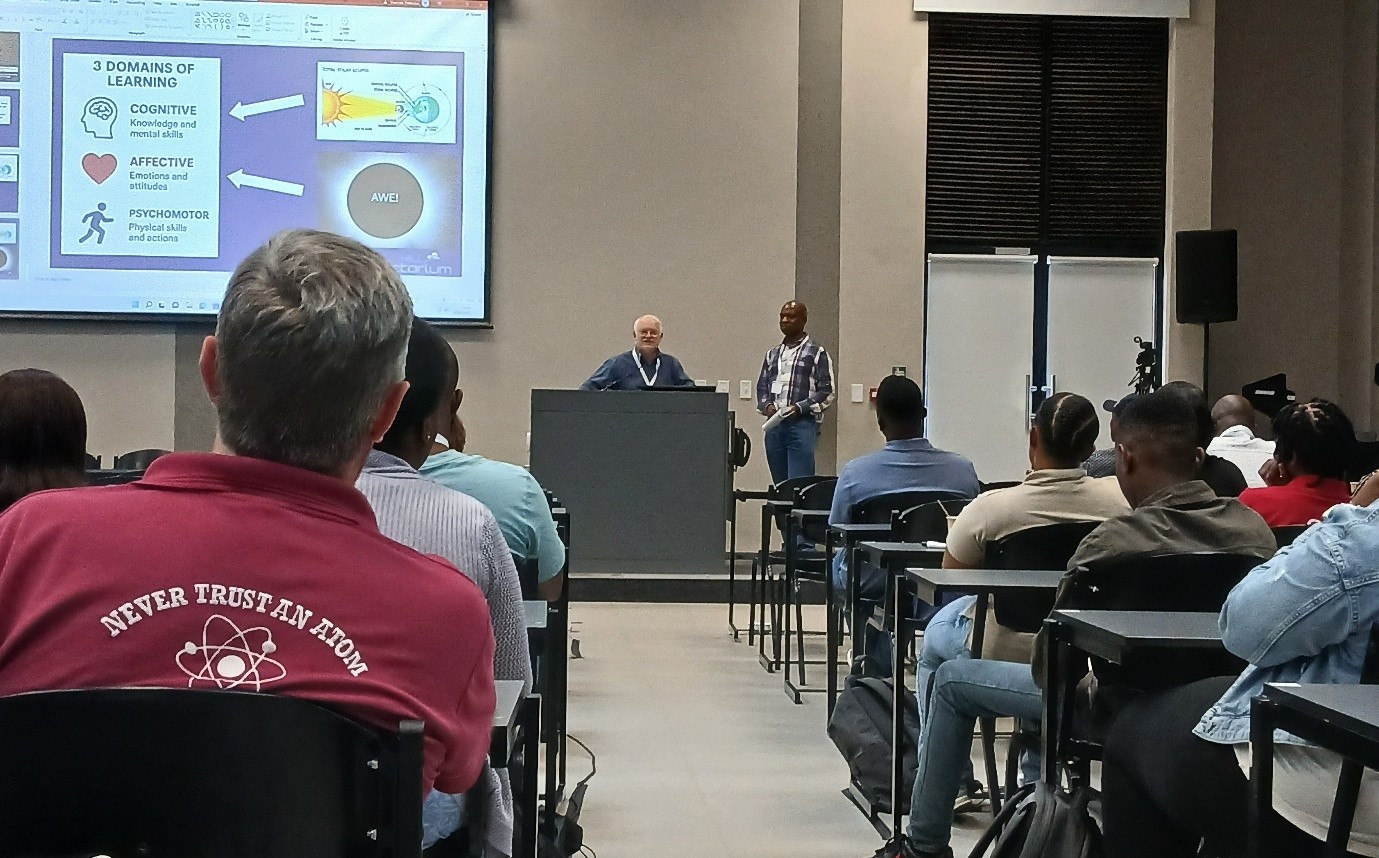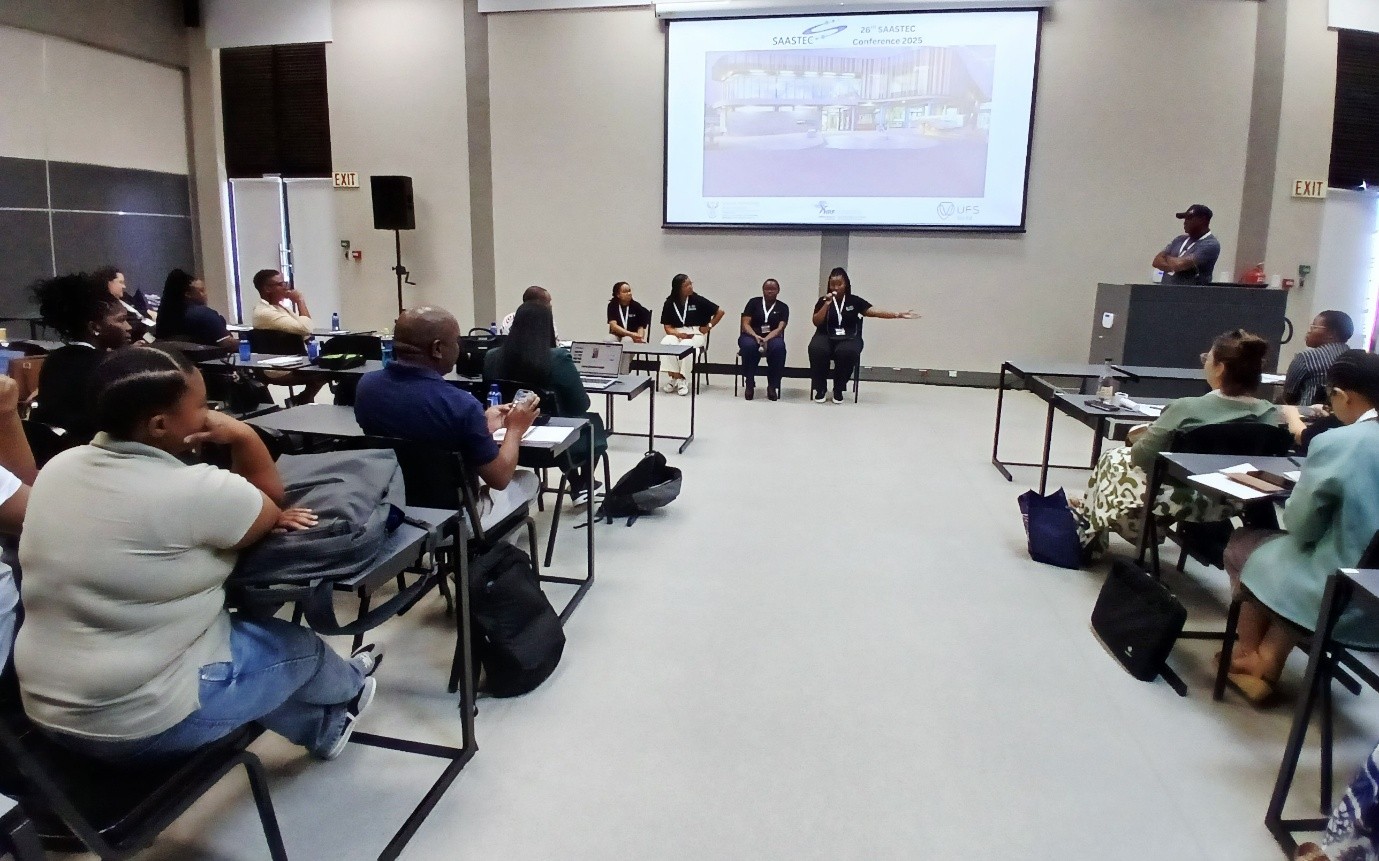
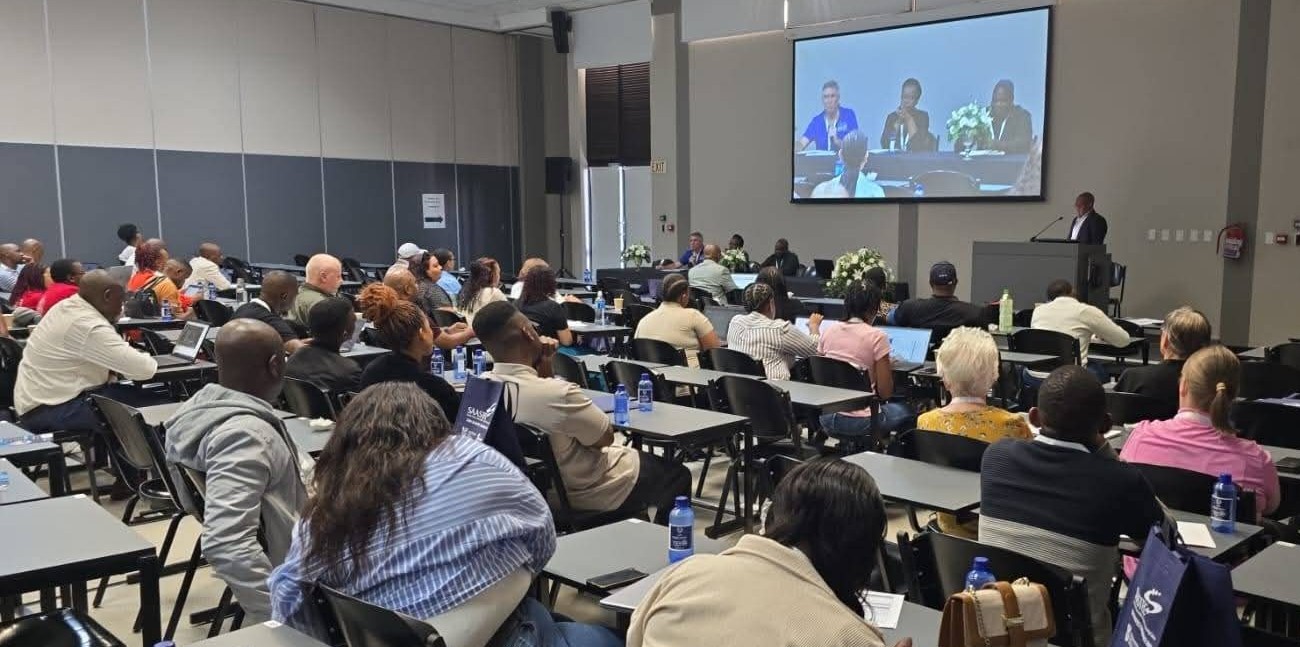
Image: The tables were turned at the 26th Annual SAASTEC Conference, when science educators and communicators from South Africa’s network of Science Centres became the learners. NRF-SAASTA played a key coordination role in bringing pertinent discussion topics to the agenda, making for robust engagement.
A jam-packed programme at the 26th Annual Southern African Association of Science and Technology Centres (SAASTEC) Conference, held at the University of Free State in Bloemfontein from 1 to 4 December 2025, brought the network of South African Science Centres together for four days of intensive discovery.
Ten plenary sessions and a host of breakaway workshops provided delegates with theoretical insights from industry experts and valuable practical learning opportunities, as science centres shared case studies, success stories and innovation.
A panel composed of Dr. Derek Fish, Dr. Mamoeletsi Mosia and Prof. Eric Maluta opened the conference discussions, responding to various opportunities, challenges and solutions to science engagement. This set the scene for the rest of the deliberations by providing insight into the imperative, through government’s Science Engagement Strategy, to embed science into our communities.
Together, science centre staff from all nine provinces worked through the common challenges they face in expanding the impact of their knowledge and resources to a wider and more diverse audience. This remains imperative for South Africa to meet its economic and social development goals, with science and innovation being key drivers of progress.
NRF-SAASTA manages the Department of Science, Technology and Innovation (DSTI) funding support for the annual SAASTEC conferences, as it emphasises the coordination of science engagement in South Africa.
“As a science awareness, education and communication fraternity, we are already doing a great job to popularise Science, Maths and Innovation in society,” says Shadrack Mkansi, Manager: Public Engagement Platforms at NRF-SAASTA. “Platforms such as the SAASTEC Conference give us a chance to take those impacts to the next level as we share best practices and learn from each other. It becomes a vehicle to keep up to date with international trends and chart a common path into a more impactful future of our discipline,” he adds.
Other highlights included a view of international trends from Angola’s newly launched state of the art science centre (Centro de Ciencia de Luanda) and reflections from Portugal’s Natural History and Science Museum on the confluence of arts, literature and science as a common language to reconnect communities to nature.
The support that science centres can bring to primary and high schools was a golden thread running through many of the discussions, especially related to topics such as robotics and coding, and the use of multimedia tools for engagement.
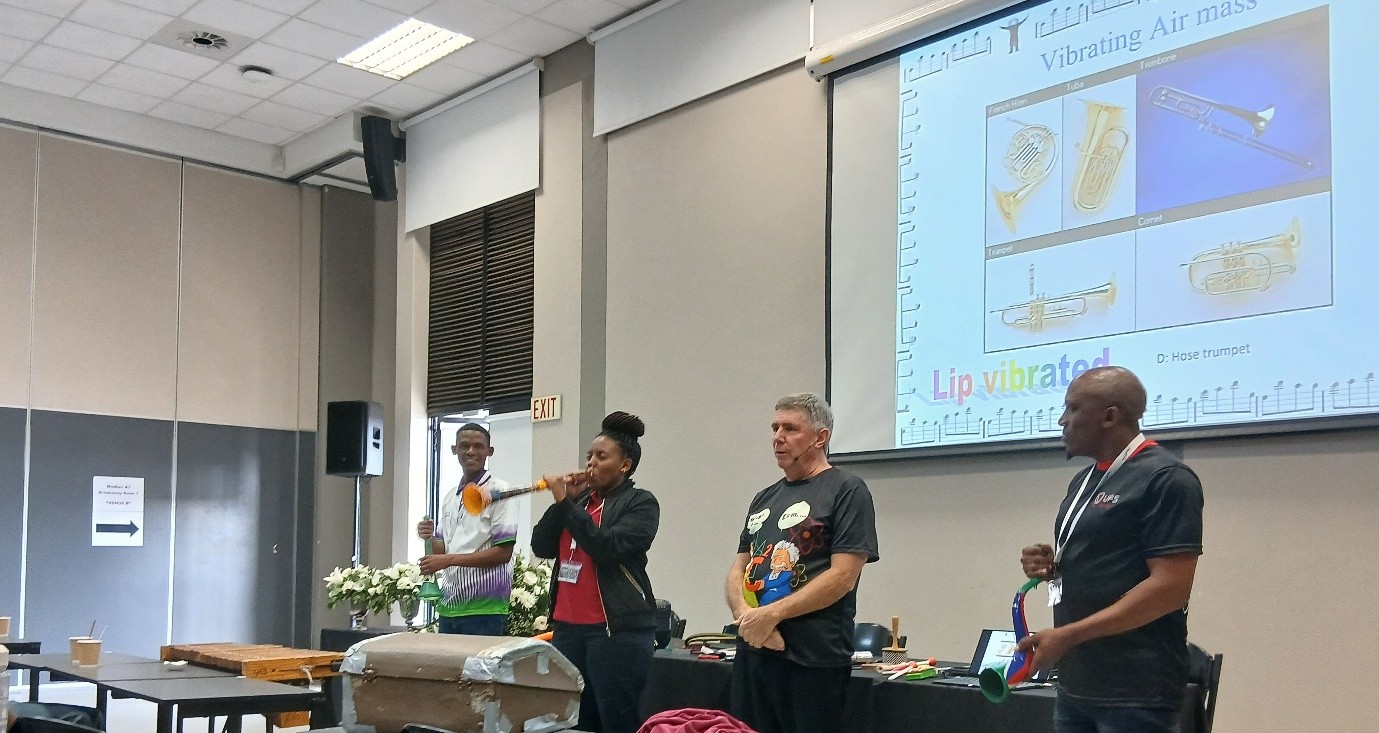
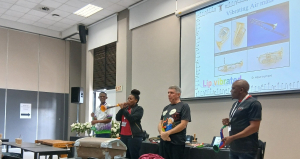
A practical science show entitled ‘Good Vibrations’, hosted by Dr. Derek Fish from the Unizulu Science Centre, was a hit with delegates for both its entertainment and educational value, showcasing how interactive science engagement can capture audience attention while imparting science knowledge.
Lastly, in the spirit of collaboration, delegates were given insight into an exciting science engagement opportunity that nature will be offering up on 25 November 2030, when one of the longest total solar eclipses of the century will be visible from parts of South Africa. A call was made for science communicators to rally behind this opportunity in numbers to bring the occurrence to the attention of the public.
 The South Africa Agency for Science and Technology Advancement (SAASTA) is a business unit of the




 Tel: +27 (0)12 392 9300